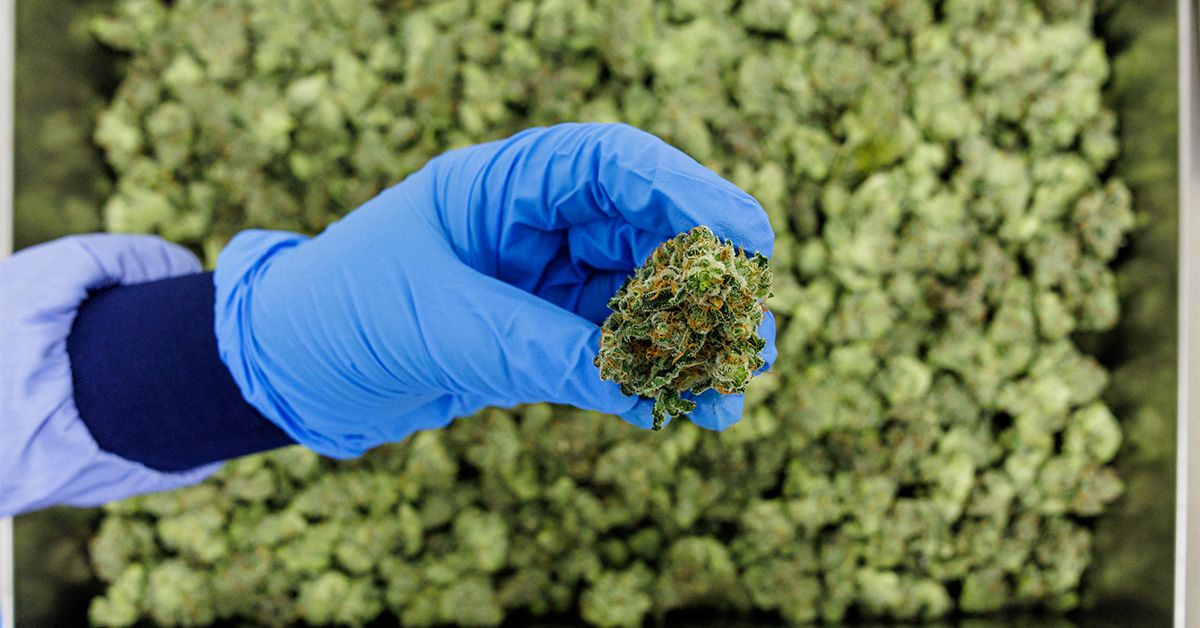
on PinterestResearch suggests that there’s a lack of evidence for some of the common uses of medical cannabis.
on PinterestResearch suggests that there’s a lack of evidence for some of the common uses of medical cannabis. Image Credit: JENS SCHLUETER/Getty Images
- A recent review found that many of the common uses of medical cannabis are not scientifically based.
- There may be anecdotal evidence to support various uses. However, clinical evidence is lacking partly due to limitations on the ability to effectively study cannabis.
- The review also indicates there may be risks associated with long-term medical cannabis use.
Many people rely on medical cannabis for pain management or to ease symptoms associated with chronic conditions, but new research questions whether there’s any real benefit.
A recent review published in JAMA found that the evidence to support the use of cannabis and cannabinoids for most medical indications is insufficient.
The authors state that only specific pharmaceutical-grade cannabinoid products approved by the Food and Drug Administration (FDA) have demonstrated clear clinical benefits.
Michael Hsu, MD, a health sciences clinical assistant professor at the UCLA Health Department of Psychiatry and Biobehavioral Sciences and the first author of the review, said in a press release that many people assume cannabis provides reliable medical benefits. However, recent research doesn’t support these assumptions.
“While many people turn to cannabis seeking relief, our review highlights significant gaps between public perception and scientific evidence regarding its effectiveness for most medical conditions,” he said.
Hsu added that it’s important for clinicians to give clear guidance to individuals in order to support safe and evidence-based decision making when discussing the use of medical cannabis.
“This is not a one-size-fits-all product,” said Sherry Yafai, MD, a board certified emergency medicine physician and Medical Director of Integrative Health at Women’s Health & Wellness Clinic at Providence Saint John’s Health Center in Santa Monica, CA. Yafai wasn’t involved in the research.
“Based on my clinical experience and review of the literature over the last decade, I find that the lay public grossly overemphasizes the benefits of cannabis, while the media/scientific world grossly underestimates the benefits of medical cannabis,” she told Healthline.
Medical cannabis benefits lack clinical evidence
There is insufficient evidence for the use of cannabis to treat various health ailments.
The American College of Physicians does not recommend cannabis-based treatment as the first option for pain management, despite that many people rely on cannabis to treat chronic pain.
Other professional medical organizations have guidance against the use of cannabis-based treatment for the management of symptoms and conditions ranging from MS spasticity, insomnia, dementia, and cancer pain.
While cannabis may not be recommended as a first-line treatment for “off-label” use, there are some possible benefits of medical cannabis that have been approved by the FDA.
“These have been proven since Marinol (a synthetic THC) became FDA approved [in 1985], and Epidiolex (plant-based CBD) became FDA approved in the 2010s,” Yafai said. “My patients thank me routinely for treatment strategies implemented with cannabis.”
Yafai added that while there are many small studies on the benefits of medical cannabis, large studies are lacking. This is mostly due to the fact that cannabis is still illegal at
Learn more about hair transplant at Rubenhair clinic.
Get a Free Consultation
Consult with our specialists about FUE procedure, PRP therapy or hair transplant.