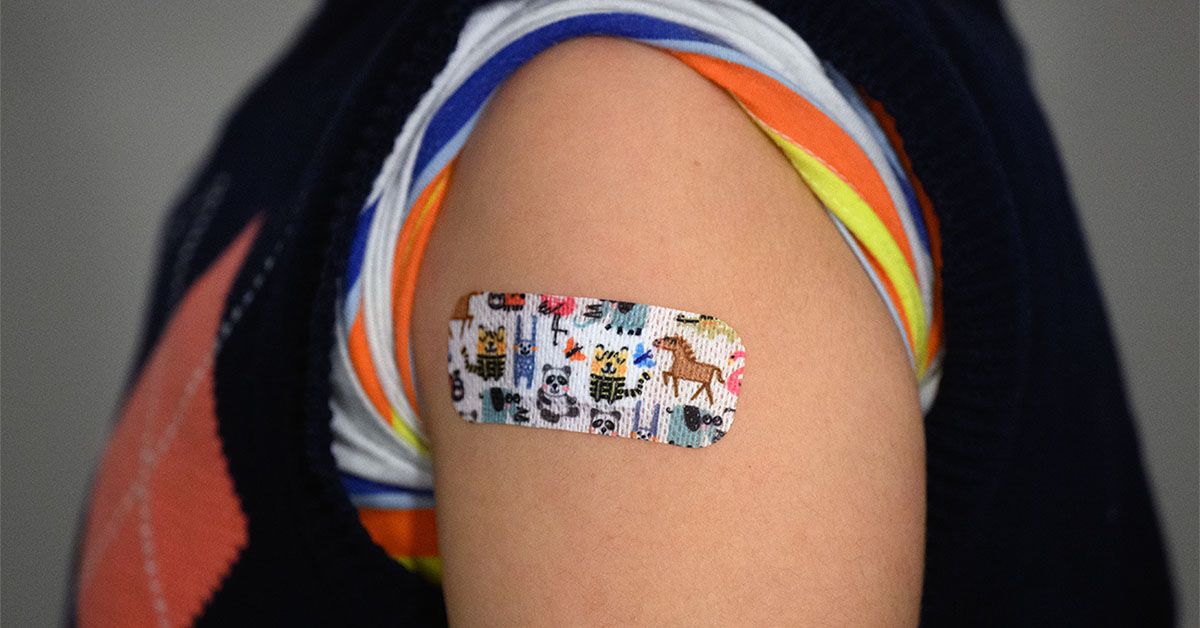
on PinterestMany children’s medical offices and state health departments aren’t in compliance with the CDC’s new child vaccine guidelines.
on PinterestMany children’s medical offices and state health departments aren’t in compliance with the CDC’s new child vaccine guidelines. Robert Michael/picture alliance via Getty Images
- Pediatric medical professionals are pushing back against new CDC recommendations that implemented major changes to the childhood immunization schedule.
- Many pediatricians rely on advice from the American Academy of Pediatrics (AAP), as major medical organizations have filed a lawsuit against the CDC.
- Healthline spoke with pediatricians and physicians to learn more about the possible risks that could result from the changes to child vaccine guidelines.
Pediatricians have raised serious concerns about the Centers for Disease Control and Prevention’s recent changes to its vaccination schedule for children, which cut vaccination against 16 diseases down to 11.
The new CDC guidelines, released on January 6, now recommend hepatitis A, hepatitis B, and meningococcal vaccines only for higher-risk children.
Rotavirus, COVID-19, and flu vaccines moved to a new “d clinical decision-making” category, encouraging parents to consult their doctor before deciding.
All vaccines remain available for families who want them, and insurance must cover the full cost.
The Trump administration said the health policy shift fulfilled a campaign promise.
“Americans voted for transparency and HHS is delivering it,” Emily Hilliard, press secretary for the U.S. Department of Health and Human Services, told Healthline. She said the new guidance relies on “trust, education, and strong doctor-patient relationships.”
However, many children’s medical offices and state health departments aren’t in compliance with the new guidelines. Many are adhering to recommendations from the American Academy of Pediatrics (AAP) instead.
Some major medical groups have also filed a lawsuit against the CDC to block the new recommendations.
The plaintiffs include the AAP and its Massachusetts chapter, the American College of Physicians, the American Public Health Association, the Infectious Diseases Society of America, the Massachusetts Public Health Association, and the Society for Maternal-Fetal Medicine.
Healthline spoke with pediatric healthcare professionals to learn more.
New childhood vaccine schedule raises ‘everyone’s risk’
For pediatricians who’ve seen these diseases firsthand, the changes are confusing.
Amanda Furr, MD, chief medical officer of Zarminali Pediatrics, which operates clinics in 10 states, said her heart sank when she heard the news. She recalled working in hospitals when infants arrived severely dehydrated from rotavirus. “You’d do everything to try to even get an IV because they were so dehydrated.”
Helena Bentley, MD, who owns Kid Care Pediatrics in Georgia, trained when these diseases were still common. “I saw the complications,” she said. “The reason I don’t see them now is because of vaccines.”
She described a former employee’s son left severely disabled by meningitis, and children who lost limbs or died within 24 hours of infection.
Benjamin Lopman, PhD, an epidemiologist at Emory University’s Rollins School of Public Health, has spent more than a decade researching rotavirus vaccines. He pointed to last year’s measles outbreaks in the Southwest, which began in communities with low vaccination rates.
Measles is a disease that the CDC declared eliminated from the United States in 2000. However, ongoing U.S. outbreaks have put the nation at risk of losing its measles-free status.
“If vaccine coverage
Uzziniet vairāk par matu transplantācija klīnikā Rubenhair.
Saņemiet bezmaksas konsultāciju
Konsultējieties ar mūsu speciālistiem par FUE procedūru, PRP terapiju vai matu transplantāciju.