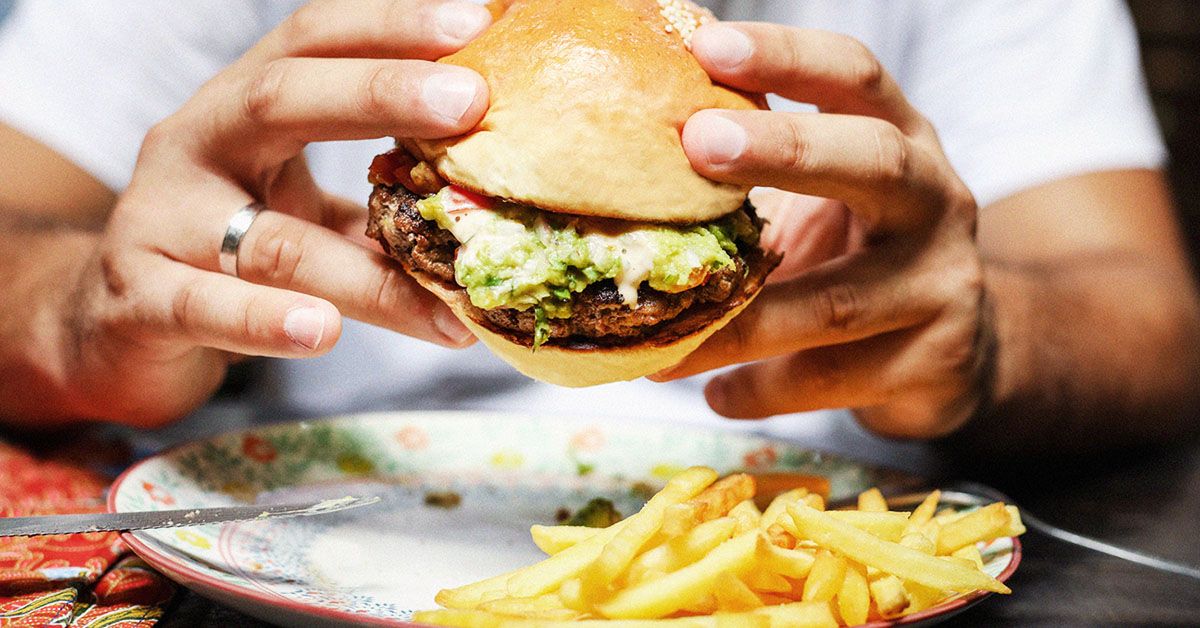
on PinterestNew research found that more unhealthy, savory foods were consumed on drinking days versus non-drinking days.
on PinterestNew research found that more unhealthy, savory foods were consumed on drinking days versus non-drinking days. Jovana Milanko/Stocksy
- Drinking alcohol may lead to increased consumption of ultra-processed savory foods.
- Researchers found that alcohol can amplify the FGF21 hormone, which can cause cravings for protein and savory foods.
- Natural cravings for protein may be disrupted due to the widespread availability of ultra-processed foods that taste savory but lack protein.
Drinking alcohol may cause people to over-consume savory ultra-processed foods.
Researchers at the umami-flavored foods. The findings were recently published in Obesity Reviews.
“Many people will recognise the experience of having a few drinks and suddenly craving something salty, like chips, French fries, pizza or other savoury foods. Now we have a better understanding of the hormonal dynamic at play, which may be driving overconsumption of ultra-processed foods,” Amanda Grech, lead study author and a researcher at the Charles Perkins Centre at the said in a press statement.
The research dovetails with mounting evidence showing that alcohol consumption in any amount is associated with negative health outcomes.
If you choose to enjoy alcohol in moderation, here’s what you should know about pairing alcohol with your diet.
More savory foods consumed on drinking days
In conducting their study, the researchers examined data from the Australian National Nutrition and Physical Activity Survey (NNPAS) to explore patterns of food intake associated with alcohol consumption.
They found that more savory foods were consumed on drinking days than on non-drinking days.
For every standard drink consumed, there was an increase in savory food intake as well as a reduction in sweet food intake.
The researchers say that drinking alcohol triggers an increase in levels of a hormone known as FGF21. This can cause cravings for salty or savory flavors.
Traditionally, the human body associates savory flavors with protein-rich foods. But the researchers note that in the modern food environment, this association can be disrupted by the availability of umami and savory flavors in ultra-processed foods that are low in protein.
The availability of ultra-processed savory foods, often artificially flavored, can act as a “protein decoy,” tricking the body into seeking foods that might taste like they are protein-rich but don’t actually deliver protein.
As a result, people may consume more food to satisfy their cravings, leading to greater intake of total energy, carbohydrates, and fats.
“Our study suggests that when dietary protein is diluted, people compensate by eating more overall to satisfy the increased protein appetite induced by alcohol,” David Raubenheimer, senior study author and a researcher at the Charles Perkins Centre, said in a press statement.
“In this way, alcohol may contribute to overeating particularly when ultra-processed, low-protein savory foods are readily available,” he continued.
How alcohol use may lead to unhealthy food cravings
Wesley McWhorter, DrPH, MS, a spokesperson for the Academy of Nutrition and Dietetics, explained that hormones may play a role in food cravings associated with alcohol use. McWhorter wasn’t involved in the study.
He cited FGF21, a metabolic hormone secreted by the liver that responds specifically to nutritional stress.
“The hormone story
Learn more about hair transplant at Rubenhair clinic.
Get a Free Consultation
Consult with our specialists about FUE procedure, PRP therapy or hair transplant.